How does a fall winterizing checklist prevent emergency freeze repairs in rental units?
Burst pipes and dead furnaces cluster in the first cold snap. Here is what a landlord should check in the fall, unit by unit, to make January quiet.
Where winter emergencies actually come from
The two calls landlords dread most in winter are no heat and a burst pipe, and both usually trace back to something small that was visible in October. Heating failures cluster at the first sustained cold because a furnace that limped through last spring has been idle for months; a dirty flame sensor, a failing igniter, or a clogged filter shows up on the first night it matters. Pipe failures come from a handful of predictable places: exterior hose bibs left connected, pipes in uninsulated exterior walls or crawl spaces, and vacant or under-heated units. Related: How do small landlords track tenant maintenance requests without losing paperwork?
The reason a checklist works is that these failure points do not move. The same crawl space pipe freezes every year unless it is insulated or the vents are closed. The same hose bib splits unless the hose is removed and the interior shutoff closed. A fall walk that visits each known weak point turns a random emergency into a routine task, and the notes from this year's walk become next year's checklist. Related: How much should a small landlord set aside each year for rental maintenance costs?
Keep reading: How do small landlords track tenant maintenance requests without losing paperwork?, What information should a tenant include when submitting a maintenance request online?, Why do maintenance photos matter when landlords assign repairs to outside vendors?. See how RentFixr helps you rental maintenance request tracking for landlords.
The heating system items that matter most
Schedule a heating inspection with your HVAC vendor in early fall, before their calendar fills. Ask for a combustion check on gas furnaces, a look at the heat exchanger, a test of the igniter and flame sensor, and a filter change. For heat pumps, a coil cleaning and refrigerant check. For boilers, a pressure and relief valve check and bleeding the radiators. Record what the technician found on the unit's history so you know which systems are on borrowed time before the cold arrives. Related: Why does preventive maintenance cost landlords less than reactive repairs over time?
Then handle the tenant-facing items yourself: replace the filter and leave spares, test the thermostat and replace its batteries, confirm the tenant knows how to operate the system and what the minimum setting should be, and put the emergency heating contact in writing. A short note about not blocking supply vents with furniture and never using an oven for heat covers most of the avoidable calls. Related: When should a landlord respond to an urgent maintenance request from a tenant?
Protecting pipes, hose bibs, and the building envelope
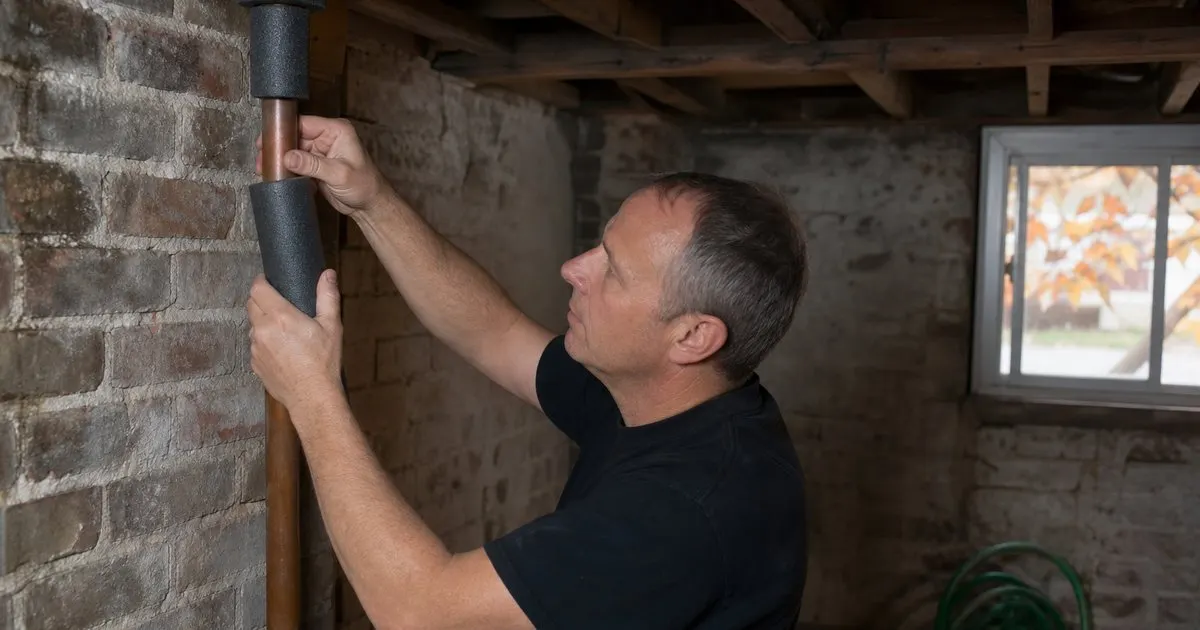
Remove and store every garden hose, close interior shutoffs to exterior faucets where they exist and drain the line, or install insulated covers on frost-free bibs. In basements and crawl spaces, wrap exposed supply lines with foam sleeves and close foundation vents for the season. Check that pipes in exterior walls, especially under kitchen sinks and in bathrooms on outside walls, sit behind cabinet doors that can be left open during deep cold, and tell tenants to do exactly that.
Walk the exterior for gaps that let cold air reach plumbing: missing weatherstripping, unsealed penetrations where lines enter the building, a dryer vent flap stuck open, a crawl space door that does not close. Seal what you can with caulk and foam. Clear gutters and confirm downspouts discharge away from the foundation, because ice dams and foundation seepage are the winter problems that produce the most expensive interior damage.
Vacant units and the tenant briefing
A vacant unit in a freezing climate needs either heat kept on at a safe minimum or a full winterization: water shut off at the main, lines drained, traps filled with non-toxic antifreeze, and the water heater shut down. Half measures are how you get a burst pipe in an empty building nobody checks for a week. Put a recurring reminder on the calendar to visually inspect any vacant unit during cold snaps, and log each visit.
Finally, give every occupied unit a short winter notice: keep heat at or above a stated minimum even when away, let faucets on exterior walls drip during severe cold, know where the main shutoff is, and report any loss of heat or water immediately through the normal request channel. When every fall task and every winter notice is logged against the unit, next year's checklist builds itself from what actually happened.
- Winter emergencies come from a small set of predictable points: idle furnaces, hose bibs, exterior wall pipes, and vacant units.
- Book heating inspections in early fall and record what the technician finds on each unit's history.
- Disconnect hoses, insulate exposed lines, seal envelope gaps, and clear gutters before the first hard freeze.
- Fully winterize vacant units and send every tenant a short written winter briefing with the main shutoff location.

Julien Jimenez
Julien Jimenez is an independent software builder based in Paris. He designs, ships, and operates focused SaaS products for small businesses and independent professionals. Read the full author page.
Track every repair in one place
Rental maintenance request tracking for landlords. RentFixr is built to help you put this into practice.
Start freeMore from the RentFixr blog
How do small landlords track tenant maintenance requests without losing paperwork?
What information should a tenant include when submitting a maintenance request online?
Why do maintenance photos matter when landlords assign repairs to outside vendors?
Get the RentFixr playbook
Practical guides on rental maintenance tracking, straight to your inbox as we publish them. No spam, unsubscribe any time.